


Colorado’s Home HVAC Is Changing. Here’s Why More Homeowners Are Switching to Heat Pumps.
Your Trusted Arvada Home Services


Something Shifted in Colorado Last Year
If you’ve been noticing more of those boxy outdoor units popping up around the neighborhood, you’re not imagining things. Heat pump installations across the service territories of five major Colorado utilities reached 14,225 in 2025, more than double the total from 2024. Industry leaders called it a turning point.
At Mighty Pine Home Services, we’re seeing it firsthand. Homeowners across Arvada, Golden, and the broader Front Range aren’t just curious about heat pumps anymore. They’re committing to them. And when you look at what’s driving that, it makes a lot of sense.
Do Heat Pumps Actually Work in a Colorado Winter?
This is the first thing most people ask. Fair question.
Cold climate heat pumps are designed to maintain 100% heating capacity at temperatures as low as 0°F. Since 80% of Denver’s winter stays above 20°F, heat pumps operate at peak efficiency for most of the heating season.
For the rare deep-cold stretches, many Front Range homeowners go with a dual-fuel setup. The heat pump handles 90% of your heating needs, and a gas furnace automatically takes over when temperatures drop well below freezing. If you already have a furnace you trust, this hybrid approach is a smart bridge into electrification without giving anything up.
Why the Economics Are Starting to Favor Electric
The cost picture has changed. Here’s what’s driving it:
- Natural gas costs are rising: Colorado’s grid policy is actively moving away from gas infrastructure. Utilities are investing heavily in electrification, which means the cost to maintain aging gas systems is unlikely to go down.
- Utility rebates are substantial: Xcel Energy alone issued 10,640 heat pump rebates worth $57 million in 2025. That’s not a rounding error — that’s a utility betting big on where things are heading.
- State policy is accelerating the shift: Colorado’s Public Utilities Commission finalized a Clean Heat framework requiring Xcel and other natural gas utilities to cut carbon emissions from their systems by 41% within 10 years, with a goal of 100% decarbonization of building heating by 2050.
The direction is clear. Homeowners who move sooner get the best incentive stacking. Those who wait tend to replace systems under pressure, with fewer options.
The Rebates Are Real. And They’re Stackable.
Upfront cost has always been the sticking point with heat pump installation in Colorado. That barrier is shrinking fast.
Colorado launched its Home Electrification and Appliance Rebate (HEAR) program in November 2025, funded by the Inflation Reduction Act. Low- and moderate-income households can qualify for up to $14,000 in combined rebates. Additional municipal and rural co-op incentives range from $400 to $7,000, depending on your provider.
When you layer these together — utility rebates, state programs, and any remaining federal credits — the installed cost of a heat pump can get surprisingly close to a conventional furnace-and-AC replacement. Check our rebates page for what’s currently available. These programs change often, and timing matters.
One System. Two Jobs. Fewer Headaches.
Here’s the part that often gets lost in the rebate conversation: heat pumps don’t just replace your furnace. They replace your air conditioning too.
That’s a big deal if your current setup is aging. Rather than facing two separate system replacements, you handle both at once. In summer, the system pulls heat out of your home. In winter, it pulls heat in from outside air — same refrigerant cycle, running in reverse.
A few formats worth knowing about:
- Ducted systems: work with your existing ductwork and are the most common whole-home solution
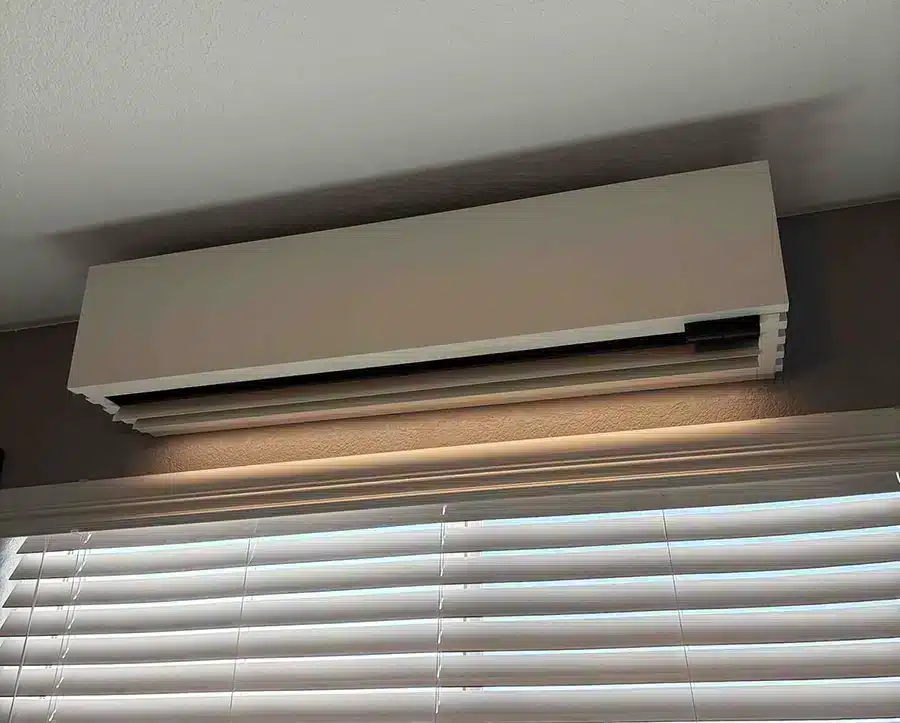
- Ductless mini splits: ideal for older homes, additions, or spaces without existing ducts, with room-by-room control
- Quilt: a next-generation heat pump format worth exploring if you’re doing a full system replacement or building new
The Grid Is Getting Cleaner: Which Makes Heat Pumps a Better Bet Over Time
This angle doesn’t get enough attention.
When you run a gas furnace, you burn gas. That’s fixed. When you run a heat pump, you use electricity — and Colorado’s grid is getting cleaner every year through ongoing wind and solar buildout. Over the past 20 years, annual heat pump sales have increased by 115% while gas furnace sales have decreased by 11% — partly because homeowners are recognizing that electrification is a long-term bet that pays off more over time, not less.
A heat pump you install today will produce fewer net emissions every year as the grid improves. That’s a value that compounds.
A Few Things to Consider Before You Switch
Heat pumps are a strong fit for most Denver Metro homes, but the details matter:
- System age: If your furnace or AC is approaching 15 years, you’re already in replacement territory. That’s the right moment to evaluate whether a heat pump makes sense for your load and usage patterns, not after something breaks.
- Proper sizing: An undersized system will underperform in Colorado winters. A Manual J load calculation is the correct starting point. Guesswork isn’t.
- Ongoing maintenance: Heat pump maintenance is straightforward, but it matters. Coil cleaning, refrigerant checks, and filter changes keep efficiency high and protect your investment. If something does go wrong down the line, heat pump repair from a technician who actually knows the systems is worth having on speed dial.
Thinking About Making the Move?
The shift happening across Arvada, Golden, and the Denver Metro isn’t hype. It’s homeowners running the numbers and liking what they see — lower operating costs, a single system for year-round comfort, and incentive programs that make the upfront investment more manageable than it’s ever been.
If you want to know whether a new heating installation or heat pump upgrade makes sense for your home, Mighty Pine Home Services can walk you through it honestly.
Book a consultation and we’ll help you figure out the right path forward.
Our Service Area
Serving Arvada and the greater Denver metropolitan area.
 All Service Areas
Join the Home Comfort Club
At Mighty Pine, we put your home’s efficiency and comfort first. Sign up for our Home Comfort Club now to take advantage of amazing deals and benefits.
Join Now