


Colorado’s New Furnace & Water Heater Law: What It Means for Your Arvada Home
Your Trusted Arvada Home Services


Hey there,
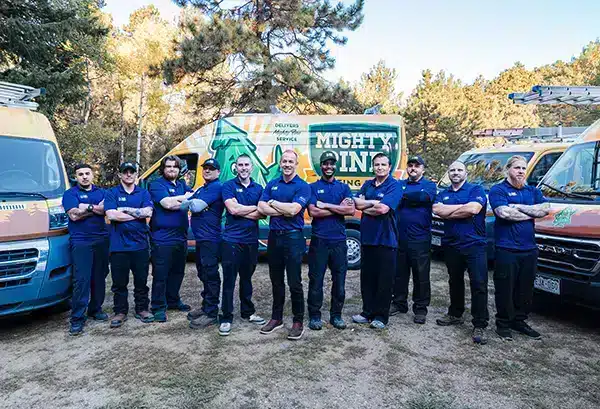
It’s Judd, the owner of Mighty Pine. If you’ve been hearing about Colorado’s House Bill 23-1161 and wondering how it affects your home, I wanted to take a minute to break down what’s actually changing and what it means for you.
The short version: if your furnace or water heater is working fine, you’re good! But if you’re looking at a replacement anytime soon, there are some new requirements that’ll impact your options and costs. Here’s what you need to know.
What Changed on January 1, 2026
As of this year, any new gas furnace or water heater sold in Colorado has to meet stricter emissions standards for NOₓ (nitrogen oxides). These are pollutants created when gas burns, and they contribute to the air quality issues we deal with along the Front Range.
This isn’t a ban on gas equipment. It just means new units have to burn cleaner than the models we’ve been installing for years.
The law covers:
- Gas furnaces (the central heating systems most homes around here use)
- Gas water heaters under 2 million BTU/hour
- Any equipment sold or installed in Colorado after January 1, 2026
Who This Actually Affects
The law is aimed at manufacturers, distributors, and contractors like us. We’re the ones who have to make sure we’re only selling and installing equipment that meets the new standards.
For you as a homeowner, it only matters when you need to replace your system. If what you have now is working properly, there’s no requirement to upgrade.
Why Colorado Made This Change
Colorado followed California’s lead on this one. The goal is reducing nitrogen oxide emissions to improve air quality, especially in areas like ours where ozone levels can be a problem.
It’s not just an environmental issue. NOₓ affects respiratory health, which is why the state decided to implement this statewide rather than leaving it up to individual counties.
What It Means When You Need a Replacement
Here’s where it gets real for homeowners. If your furnace or water heater quits tomorrow, your options have changed.
Any remaining old-standard inventory from 2025 is basically gone at this point. What’s available now are ultra-low NOₓ gas models or electric options. Both work well. It’s really about what makes sense for your home and your budget.
The challenge is cost. The new ultra-low NOₓ equipment typically runs 40% or more higher than what standard models cost last year. A furnace replacement that might’ve been $4,500-$6,500 in 2025 could now run $7,000-$12,000 or more, depending on your home’s setup and the model that fits your needs.
Water heaters have seen similar price increases, though the exact numbers vary based on size and type.
The higher cost isn’t arbitrary. These units use genuinely different technology to achieve those lower emissions. We’re talking about redesigned burners and combustion controls, not just minor tweaks to existing models.
The Efficiency Trade-Off
Here’s one upside: most of these ultra-low NOₓ models are also high-efficiency units, usually 95% or better for furnaces. That translates to lower monthly heating bills compared to older equipment.
You’re paying more upfront, but over the typical 15-20 year lifespan of a furnace, the energy savings can help offset that initial cost. Whether that pencils out in your favor depends on what you’re replacing, how much heat your home needs, and how long you plan to stay put.
Questions I’ve Been Getting
“Do I have to replace what I have now?”
Not at all. If your current system is working and safe, you can keep using it as long as you want.
“What happens if my furnace dies in the middle of winter?”
You’ll need one of the new ultra-low NOₓ models or an electric system. The old inventory is gone, so we’re all working with the new equipment standards now.
“Can I still get a gas system?”
Absolutely. Gas furnaces and water heaters aren’t going anywhere. They just have to meet the new emissions standards. The equipment is available. It’s the price that’s changed.
“Should I replace my system before it breaks?”
Depends on what you have. If your equipment is 15+ years old and starting to act up, replacing it on your timeline instead of when it fails gives you more control over the process. If it’s newer and running well, there’s no reason to rush.
Planning Ahead Makes Sense
Most people end up replacing heating equipment when it fails. That’s understandable, but it means making decisions under pressure, often late at night when it’s cold and you need heat now.
If your equipment is getting up there in age (furnaces last 15-20 years, water heaters 10-12), it’s worth getting familiar with what furnace and water heater replacement looks like under these new rules. You’ll have time to understand your options, get accurate numbers for your situation, and make decisions without the emergency pressure. Waiting until something fails means working with whatever’s available that day, usually at emergency rates.
The law’s not changing, and prices aren’t likely to come down anytime soon. What you can control is how informed you are when replacement time comes.
Let’s Talk About Your Situation
Whether your system just quit or you’re trying to plan ahead, I’m happy to walk you through what makes sense for your home under these new standards. We’ve been doing this in Arvada for years, we know Colorado’s requirements inside and out, and I’ll give you straight answers about what works for your situation.
Give us a call or reach out online. We’ll help you figure out the right move, whether that’s replacing now or keeping an eye on what you have for another few years.
We’re here when you need us,
Judd
Mighty Pine
Our Service Area
Serving Arvada and the greater Denver metropolitan area.
 All Service Areas
Join the Home Comfort Club
At Mighty Pine, we put your home’s efficiency and comfort first. Sign up for our Home Comfort Club now to take advantage of amazing deals and benefits.
Join Now